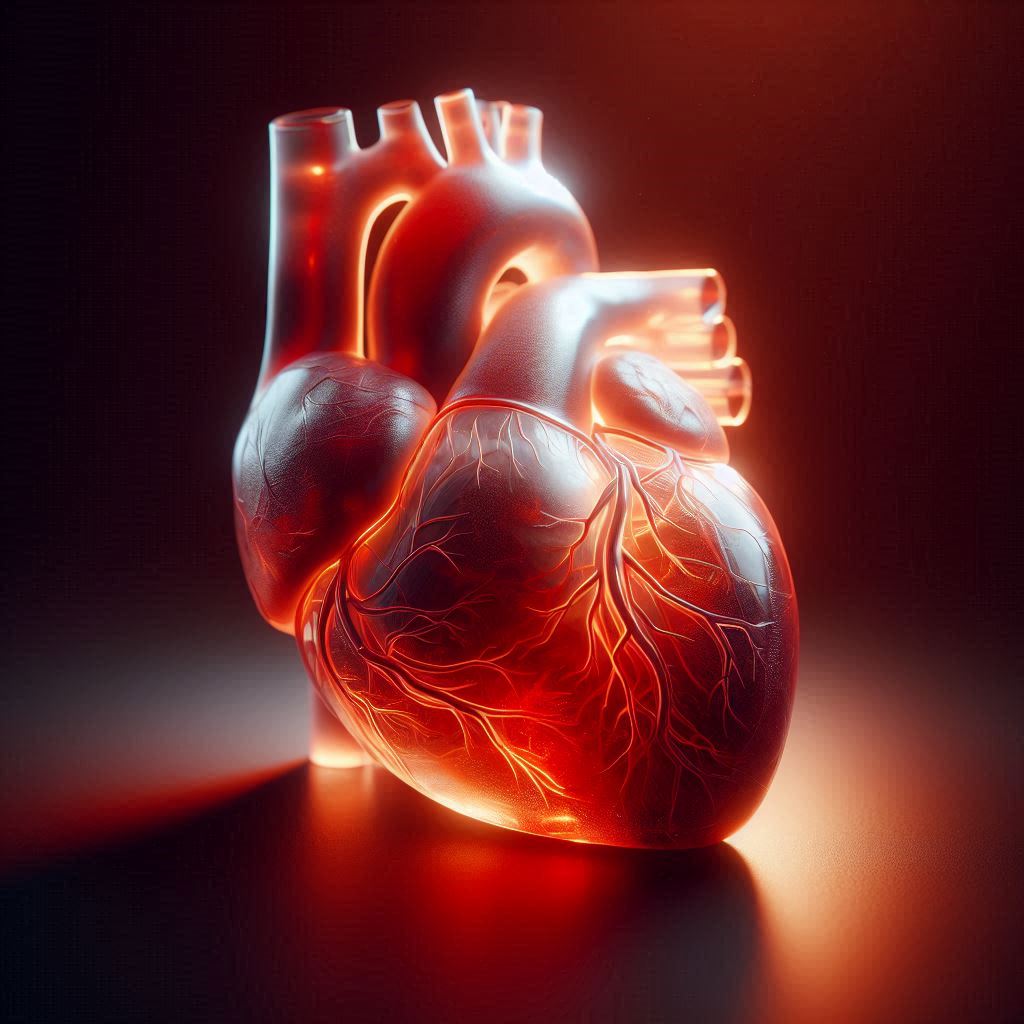
This Isn't the Wolverine Stack Article
If you've read our piece on BPC-157 + TB-500 for injury recovery, you already know TB-500 as the "cell migration coordinator" that helps heal tendons and muscles. Cool stuff. But honestly? That's just the opening act.
There's a growing body of published, peer-reviewed research suggesting TB-500 may do something way more significant: actually reverse cardiac fibrosis — the scar tissue buildup that drives heart failure, arrhythmias, and ultimately kills people.
This is the cardiac angle. And look, if even half of what the research shows holds up in larger human trials, it could change how we think about heart disease entirely.
Your Heart Isn't a Pump (and That Matters) 🫀
Here's what most people learn in school: the heart is a four-chamber pump that pushes blood around. Technically true, but wildly incomplete — like calling your smartphone a flashlight.
Back in 1981, researcher Adolfo de Bold at the University of Ottawa proved that the heart actually produces hormones. He showed that when your atria (upper chambers) stretch from increased blood volume, specialized mechanoreceptor cells trigger the release of atrial natriuretic peptide (ANP) directly into the bloodstream.
What does ANP do? It tells your kidneys to dump sodium and water. Blood volume drops, pressure normalizes, and the stretch stimulus resolves. Your heart is literally regulating its own workload through hormonal feedback. Pretty slick.
The heart also produces:
- BNP (B-type natriuretic peptide) from the ventricles under stress
- Endothelin (a vasoconstrictor)
- Prostaglandins (anti-inflammatory mediators)
So yeah — the heart isn't just pumping. It's sensing, signaling, and orchestrating. Understanding this makes TB-500's cardiac effects make a lot more sense.
How Hearts Scar Themselves to Death
When your heart gets damaged — from a heart attack, chronic hypertension, viral cardiomyopathy, or even athletic overtraining — here's the cascade that follows:
- Injury → damaged cells release DAMPs (damage-associated molecular patterns), essentially smoke signals for the immune system
- Inflammation → macrophages flood in, clear debris, remove dead cells. This part is normal and healthy.
- But if the stimulus doesn't resolve → inflammation goes chronic
- Chronic inflammation → activates fibroblasts (your body's construction workers)
- Activated fibroblasts → deposit collagen indiscriminately
- Result → stiff, non-contractile scar tissue that doesn't conduct electricity
This is called myocardial fibrosis, and it's one of the biggest drivers of heart failure progression.
Here's the thing — a 2015 study by Segura in Circulation Research found that 50% of heart failure patients have significant fibrosis — even those with preserved ejection fraction. Half. And the medical system has essentially nothing that reverses it.
The Left Ventricular Hypertrophy Trap
This is where it gets really interesting — and really problematic.
When you have chronic high blood pressure, your left ventricle responds the way any muscle does to constant load: it gets bigger. This is called left ventricular hypertrophy (LVH), and it seems adaptive at first. Thicker walls, more force. Physics works, right?
Except there's a nasty catch: coronary blood vessels don't grow proportionally.
A 2003 study by Schwarzkopf in the Journal of Hypertension showed that patients with LVH develop significant capillary deficit — fewer blood vessels per unit of tissue. So if your ventricle has gotten 20% thicker, its blood supply may have only grown 5%.
The inner layers of the ventricle (the subendocardial region) become chronically oxygen-starved. This hypoxia triggers HIF-1-alpha, which upregulates TGF-beta, which activates fibroblasts, which deposit collagen.
The bigger the heart gets, the more it suffocates itself. The more it suffocates, the more it scars. This is why LVH is such a powerful predictor of sudden cardiac death — it's not just about size, it's about the fibrosis that comes with it.
What Conventional Cardiology Does (and Doesn't Do)
Here's the typical treatment path for someone with LVH and fibrosis:
| Treatment | What It Does | What It Doesn't Do |
|---|---|---|
| ACE inhibitors | Reduces angiotensin II signaling | Doesn't reverse existing fibrosis |
| Beta blockers | Lowers heart rate and blood pressure | Doesn't address scar tissue |
| Aldosterone antagonists | Blocks aldosterone | Doesn't regenerate damaged tissue |
| Blood thinners | Reduces clot risk | Does nothing for fibrosis |
| Diuretics | Removes excess fluid | Symptom management only |
See the pattern? These drugs address step one (blood pressure) in a seven-step cascade. Steps two through seven — the mechanical strain, TGF-beta activation, fibroblast proliferation, collagen deposition, loss of diastolic function, and clinical heart failure — keep marching forward.
It's basically symptom management while the organ slowly fills with scar tissue. Not great.
How TB-500 Works at the Cellular Level
TB-500 is a synthetic version of thymosin beta-4, a naturally occurring 43-amino-acid protein identified by Schroder in 1981. It's found in almost every cell in your body.
What makes it special: it's an actin-regulating peptide. Your cells are built on a cytoskeleton of actin filaments — structural proteins that form the cell's scaffolding. When a cell needs to move, change shape, or heal, it remodels this cytoskeleton. TB-500 binds to individual actin units, prevents uncontrolled polymerization, and makes them available for controlled redeployment.
Think of it as a librarian organizing the cell's building supplies — keeping everything available but not letting things pile up randomly.
Four Mechanisms That Matter for the Heart 🔬
When TB-500 enters circulation, it does four things that are directly relevant to cardiac disease:
1. Builds New Blood Vessels (Angiogenesis)
A 2002 study by Malinda and Fawcett demonstrated that TB-500 stimulates endothelial cells to form new blood vessels by upregulating VEGF and increasing integrin alpha-V-beta-3 expression.
In the context of a fibrotic heart, this is huge. You're essentially telling an oxygen-starved organ to build new supply lines, directly breaking the hypoxic cycle that drives fibrosis.
(And no, VEGF upregulation doesn't cause cancer. TB-500 is actually being studied for anti-cancer properties. Just wanted to head that one off.)
2. Shifts Inflammation from Destructive to Reparative
A 2010 study by Filip in Molecular Medicine showed that in ischemic heart tissue, TB-500 downregulates pro-inflammatory cytokines (TNF-alpha, IL-6) while upregulating anti-inflammatory mediators.
The key insight: it doesn't eliminate inflammation entirely. It shifts the immune response from destructive inflammation to reparative inflammation. Yes, that's a real thing — your body has different gears of immune response, and TB-500 appears to help shift into the healing gear.
3. Deprograms Fibroblasts (The Big One)
Okay, this is the one that really gets interesting.
A 2013 study by Sosne in PLoS One demonstrated that TB-500 downregulates the TGF-beta/Smad3 pathway — the exact signaling cascade that turns fibroblasts into collagen-producing machines.
The result: a 60% reduction in alpha-smooth muscle actin expression, the primary marker of fibroblast activation.
This isn't just preventing new fibrosis. It's essentially telling fibroblasts that are already activated and building scar tissue to stand down and return to their resting state. That's a big deal.
4. Mobilizes the Body's Repair Crew
A 2008 study by Bock-Marquette in Circulation Research showed that TB-500 mobilizes bone marrow-derived progenitor cells and promotes their migration to cardiac tissue.
In plain terms: TB-500 tells your body's stem cell repair crew, "Get to the heart. There's work to do."
The Reversal Study That Changes Everything 🧐
Here's the study that should make anyone paying attention sit up straight.
Smart et al. (2015, Cardiovascular Research) administered TB-500 six weeks after a heart attack — after fibrosis was already established. Not during injury, not immediately after. Six weeks later, when the scar tissue was already in place.
The results:
- Reduced collagen content
- Improved cardiac function
- Improved ejection fraction
- Actual reversal of existing fibrosis
Not slowed progression. Not halted. Reversed. The scar tissue went the other direction.
This matters because conventional cardiology has essentially accepted cardiac fibrosis as a one-way street. Once the scar tissue is there, you manage around it. This study suggests that may not actually be a biological reality — it may just be a limitation of current treatments.
TB-500 and Cardiac Arrhythmias
Atrial fibrillation, PVCs, PACs — they all share a common root: abnormal electrical conduction through heterogeneous (patchy) tissue.
Your heart's electrical system depends on organized conduction through specialized cells. When you have fibrosis — especially patchy fibrosis — you create barriers. Electrical impulses get slowed, diverted, and split into multiple pathways. This is the setup for re-entry circuits, where an electrical impulse circles around a fibrotic scar and re-excites the same tissue over and over, creating a stable arrhythmia.
A 2014 study by Nattel in Circulation Research showed conclusively that AFib is fundamentally a disease of atrial fibrosis. More fibrosis = higher AF burden.
So how does TB-500 address arrhythmias? By going after the root cause:
- Reduces the fibrotic substrate → no patchy scar tissue = no re-entry circuits
- Improves kidney function → better electrolyte regulation → fewer ionic triggers
- Reduces inflammation → shifts tissue from pro-arrhythmic to anti-arrhythmic
A 2016 study by Worth in Basic Research in Cardiology found that post-infarction TB-500 treatment produced a 67% reduction in ventricular arrhythmias — directly correlated with reduced fibrosis. That's not a subtle effect.
The Heart-Kidney Connection Nobody Talks About
Here's something that honestly should be common knowledge but somehow isn't: chronic kidney disease and heart disease are essentially the same disease presenting in different organs.
Both are driven by:
- Chronic RAAS activation
- Persistent inflammation (TNF-alpha, IL-6, CRP)
- Oxidative stress
- Fibrosis (glomerulosclerosis in kidneys, myocardial fibrosis in the heart)
- Endothelial dysfunction
The RAAS (renin-angiotensin-aldosterone system) is the master link. When your kidneys perceive low blood pressure, they release renin, which ultimately produces angiotensin II — a molecule that simultaneously damages both the kidneys' filtering units and activates cardiac fibroblasts.
In chronic disease, this system gets stuck in overdrive: hypertension causes kidney vasoconstriction, which triggers more renin, which creates more angiotensin II, which worsens hypertension. It's a self-tightening noose.
TB-500 appears to break this cycle at multiple points:
- A 2012 study by Badal showed TB-500 improved microvascular perfusion in renal tissue and reduced proteinuria by 40%
- A 2014 study by Sosne in the American Journal of Pathology showed TB-500 reduced albuminuria by 56% and glomerulosclerosis by 48% in diabetic nephropathy
When you improve kidney function, you break the RAAS spiral. When you break the RAAS spiral, you break the cardiac disease spiral. It's not treating two organs separately — it's addressing the shared root cause.
The Full Cascade: Disease to Recovery
Here's what the research suggests happens when TB-500 enters a system with established cardiac-renal disease:
Phase 1: Angiogenesis kicks in
- New blood vessels form throughout the body
- Heart capillary density improves
- Hypoxic myocytes become properly oxygenated
- HIF-1-alpha signaling drops → TGF-beta production slows
Phase 2: Fibroblast deprogramming
- Smad3 pathway gets inhibited
- Collagen deposition stops
- Existing scar tissue begins remodeling as new tissue gradually replaces it
Phase 3: Kidney recovery
- Improved angiogenesis reaches the kidneys
- Glomerular perfusion improves
- Creatinine drops, potassium normalizes
- RAAS spiral starts unwinding
Phase 4: Electrical normalization
- Fibrotic substrate in the heart is no longer being created
- Existing fibrosis is slowly replaced with healthy tissue
- Re-entry circuits lose their substrate
- Arrhythmias resolve
The Research, Summarized 📊
Here's the published evidence in one place:
| Year | Researchers | Journal | Finding |
|---|---|---|---|
| 2002 | Malinda & Fawcett | Journal (Angiogenesis) | TB-500 promotes angiogenesis and tissue perfusion |
| 2003 | Schwarzkopf | J. of Hypertension | LVH creates capillary deficit and hypoxia |
| 2008 | Bock-Marquette | Circulation Research | TB-500 mobilizes bone marrow progenitor cells for cardiac repair |
| 2009 | Zhang | J. Cardiovascular Pharmacology | TB-500 attenuates cardiomyocyte hypertrophy via calcium signaling |
| 2010 | Filip | Molecular Medicine | TB-500 shifts post-ischemic inflammation from destructive to reparative |
| 2012 | Badal | (Renal perfusion study) | TB-500 improves renal microvascular perfusion, reduces proteinuria 40% |
| 2013 | Sosne | PLoS One | TB-500 inhibits TGF-beta/Smad3, reduces fibroblast activation 60% |
| 2014 | Nattel | Circulation Research | AFib is fundamentally a disease of atrial fibrosis |
| 2014 | Sosne | Am. J. of Pathology | TB-500 reduces glomerulosclerosis 48%, albuminuria 56% |
| 2015 | Smart | Cardiovascular Research | TB-500 reverses post-infarction fibrosis (administered 6 weeks post-MI) |
| 2015 | Segura | Circulation Research | 50% of heart failure patients have significant fibrosis |
| 2016 | Worth | Basic Research in Cardiology | TB-500 reduces ventricular arrhythmias by 67% |
The Honest Assessment
Let's be real about where things stand:
What's strong:
- The mechanistic logic is sound. TB-500 targets the actual pathways that drive cardiac fibrosis.
- Published research in respected journals supports the key claims.
- The numbers are impressive — 60% reduction in fibroblast activation, 67% reduction in arrhythmias, reversal of established fibrosis.
What's still uncertain:
- Most studies are preclinical (animal models). Human cardiac data is limited.
- Long-term dosing protocols for cardiac applications aren't established.
- TB-500 needs to be cycled — it's not something you take indefinitely.
- We don't have large-scale human clinical trials specifically for cardiac fibrosis.
What's frustrating:
- TB-500 is based on a naturally occurring protein (thymosin beta-4) that can't be patented, which means pharmaceutical companies have little financial incentive to fund the billion-dollar trials needed for FDA approval.
- The research that exists is compelling enough that the lack of follow-up honestly feels like a missed opportunity.
Why This Isn't Standard of Care
The blunt answer: economics. TB-500 can't be patented. No pharmaceutical company is going to invest billions in clinical trials for a molecule they can't exclusively sell. The research exists. The mechanism makes sense. The results are published in major journals. But without a profit pathway, it stays in the "promising research" category.
That doesn't mean it doesn't work. It means the system isn't built to validate it.
What This Means for You
We're not going to tell you what to do. But we will tell you what the research says, and the research says TB-500 addresses cardiac disease at the mechanism level — fibroblast activation, hypoxia-driven fibrosis, RAAS dysfunction, inflammatory cascading — rather than at the symptom level.
If you or someone you know is dealing with cardiac fibrosis, LVH, AFib, or the kidney-heart disease connection, this research is worth knowing about. Bring it to your cardiologist. Have the conversation. The published studies are real, peer-reviewed, and available for anyone to read.
Your heart isn't just a pump. It's a self-regulating organ that's trying to heal itself. The question is whether we're going to help it or just manage its decline.
This article is for educational and informational purposes only. It does not constitute medical advice. TB-500 is not FDA-approved for any medical use, including cardiac conditions. Always consult qualified healthcare providers for heart-related health concerns. Nothing in this article should be interpreted as a recommendation to use any research compound.
Researching peptides? Track your protocols free.
Pro members save 10% on every shop order, all year, with no cap.
Topics covered:
Enjoyed this article?
Get an email when we publish a new guide, when something sold out is back, or when a price drops.