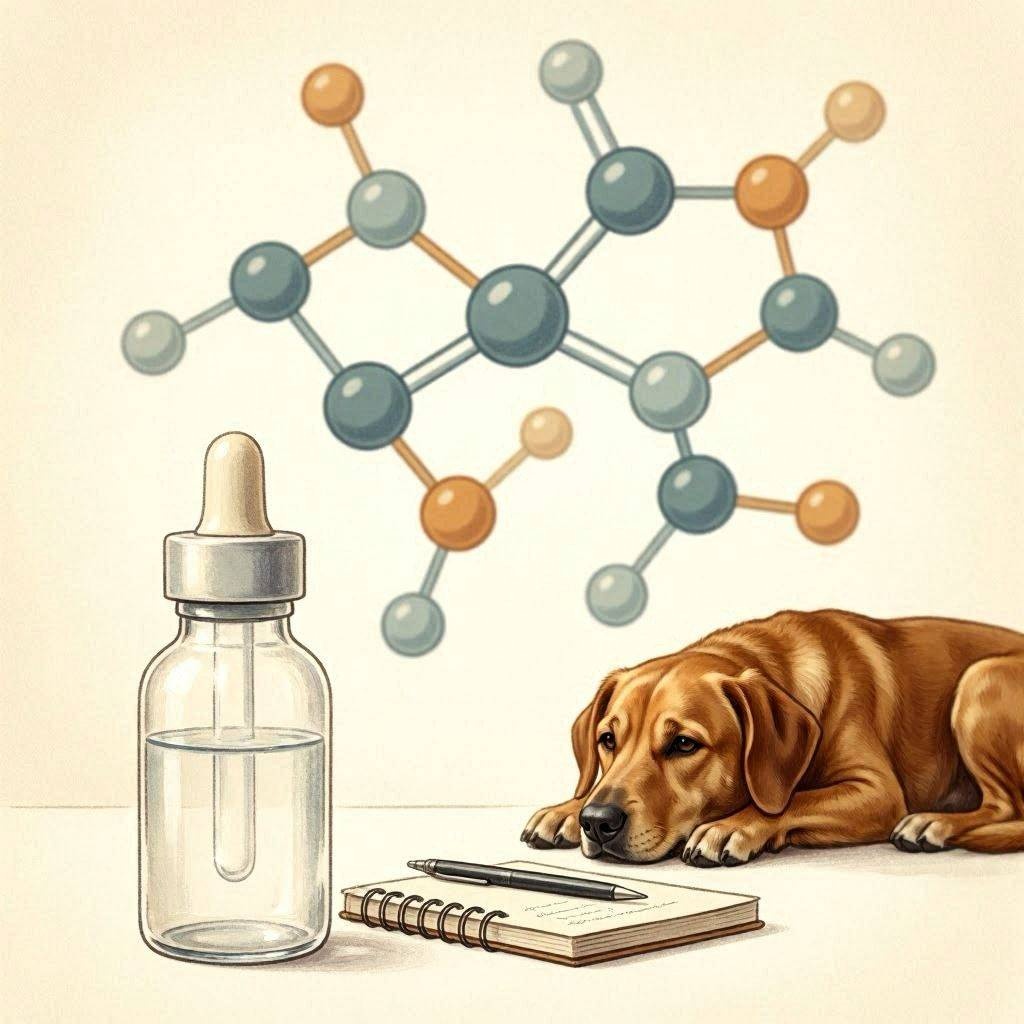
Suddenly everyone is selling peptides for your dog
Overnight, "peptides for pets" jumped from a niche biohacker rabbit hole to actual companies launching with slick sites and testimonial reels. "It gave my dog his spark back." "More energy, better mobility, more good years."
The pitch basically writes itself, because it targets the one thing every dog owner would do almost anything for: more healthy time with a pet who is slowing down.
We get it. Watching your dog struggle to get up the stairs is brutal. If a peptide promised to fix that, you would want to believe it too.
So before you buy a vial off a testimonial, here is the honest version: what these peptides might actually do, what the research really says, and the stuff nobody rushing to sell you a "pet protocol" wants to put on the label.
One note up front: everything here is educational, not veterinary advice. Nothing below is a recommendation to give your dog anything. That is a conversation for a vet.
What is actually being used, and why
The star of the pet-peptide trend is BPC-157, the same "healing" peptide that blew up in the human recovery world. In dogs, the interest is mostly joints, tendons, ligaments, gut issues, and bouncing back from injury or surgery. Older dogs with stiff hips, active dogs with soft-tissue injuries, that is the target.
You will also see TB-500, collagen and copper peptides, and a few others floated for coat condition, recovery, and general "healthy ageing." But BPC-157 is the one carrying the trend, so let's be honest about what is actually behind it.
What the research actually shows
Here is the part the testimonials skip: almost all of the BPC-157 evidence comes from rats and mice.
The rodent research is genuinely large and genuinely interesting. Faster tendon-to-bone healing, ligament repair, gut protection, all of it showing up consistently versus controls. On paper the mechanism (it appears to help injured tissue grow new blood vessels and repair) is plausible for the exact joint-and-injury problems people want to fix in dogs.
But controlled clinical trials in actual dogs? Essentially none. Not "a few small ones," basically zero published. So when a brand says "proven to help your dog," what they really mean is "proven to help a rat, and we are hoping it carries over."
It might. That is exactly why it is being studied. But hoping is not the same as knowing, and your dog is not a lab rat.
The 4 things the sellers will not tell you
1. It is the same research peptide, marked way up. Most of these "pet peptide" products are the exact same research-grade vials, from the exact same overseas labs, repackaged with a dog on the label and sold for several times the price. You are often paying a big premium for a sticker and a story. We say this as people who deal in these compounds every day: the markup on "premium" repackaging is wild.
2. You cannot monitor it at home. Responsible peptide use means bloodwork, before and during. Most dog owners cannot run labs on the kitchen table, and this is exactly the concern real vets raise. Flying blind on a growth-promoting compound is not "wellness."
3. Nobody is regulating the quality. There is no FDA or veterinary approval for these peptides in animals. Quality swings wildly between sources, and a vial is only as trustworthy as its testing, which for a lot of pet-branded products is either missing or impossible to verify. You are trusting a label.
4. The cancer risk is not hypothetical enough to ignore. Anything that helps tissue grow and build new blood vessels could, in theory, also feed a tumor your dog already has that you do not know about. This is why vets are cautious about BPC-157 in any dog with cancer, and why a real check-up first genuinely matters. It is the single most important line in this whole article.
If you are still considering it
Fair. The science is interesting and veterinary peptides might have a real future. But do it like an adult who loves their dog, not like someone chasing a testimonial:
- Talk to a vet first. Ideally one who actually understands peptides. More of them do every year.
- Get bloodwork, and rule out cancer, before anything.
- If you go forward, use something accountable: a real veterinary compounding pharmacy, or at the very least a source whose testing you can actually verify. Not a mystery vial from an ad.
- Judge it on consistency over months, not one good week you can pin on anything.
Bottom line
Peptides for dogs sit in the same honest place as most of this field: a real pile of animal research, a mountain of hype stacked on top of it, and almost no proof in the specific animal you actually care about.
It may genuinely earn a place in veterinary medicine one day. Today it is early, unregulated, and being sold hard to people who are hurting for their pets.
If your dog is slowing down, that is a vet conversation, not an impulse buy off a founder's feed. The compounds are interesting. Your dog deserves better than "interesting."
→ Browse the honest peptide research library
FAQ
Is BPC-157 safe for dogs? There is no approved safety data for dogs, only rodent research. The main real-world concern is that growth-promoting peptides could stimulate an existing tumor, which is why vets advise a check-up, and caution with any dog that has cancer, before considering it.
Does BPC-157 actually work for dog joints and arthritis? It shows consistent healing effects in rodent studies, but there are essentially no controlled clinical trials in dogs. Promising in theory, unproven in practice.
Are "pet peptides" different from normal research peptides? Usually not. Many pet-branded products are the same research-grade compounds, repackaged and marked up. The dog on the label does not change what is in the vial.
Should I give my dog peptides? That is not a question for a blog. It is a question for a veterinarian who can examine your dog, run bloodwork, and weigh the mostly-unknown risks against your dog's actual condition.
Educational content only, not veterinary or medical advice. None of these compounds are approved to prevent, treat, or cure any condition in animals. Always consult a licensed veterinarian before making decisions about your pet's health.
Researching peptides? Track your protocols free.
Pro members save 10% on every shop order, all year, with no cap.
Topics covered:
Enjoyed this article?
Get an email when we publish a new guide, when something sold out is back, or when a price drops.